What do Vietnamese eat for breakfast?
In Vietnamese cities breakfast is often eaten out, early, from a street stall: phở, bánh mì, sticky rice, bánh cuốn, bún bò Huế or cơm tấm. Here is what each one is, how Hanoi and Saigon differ, and where phin coffee fits.
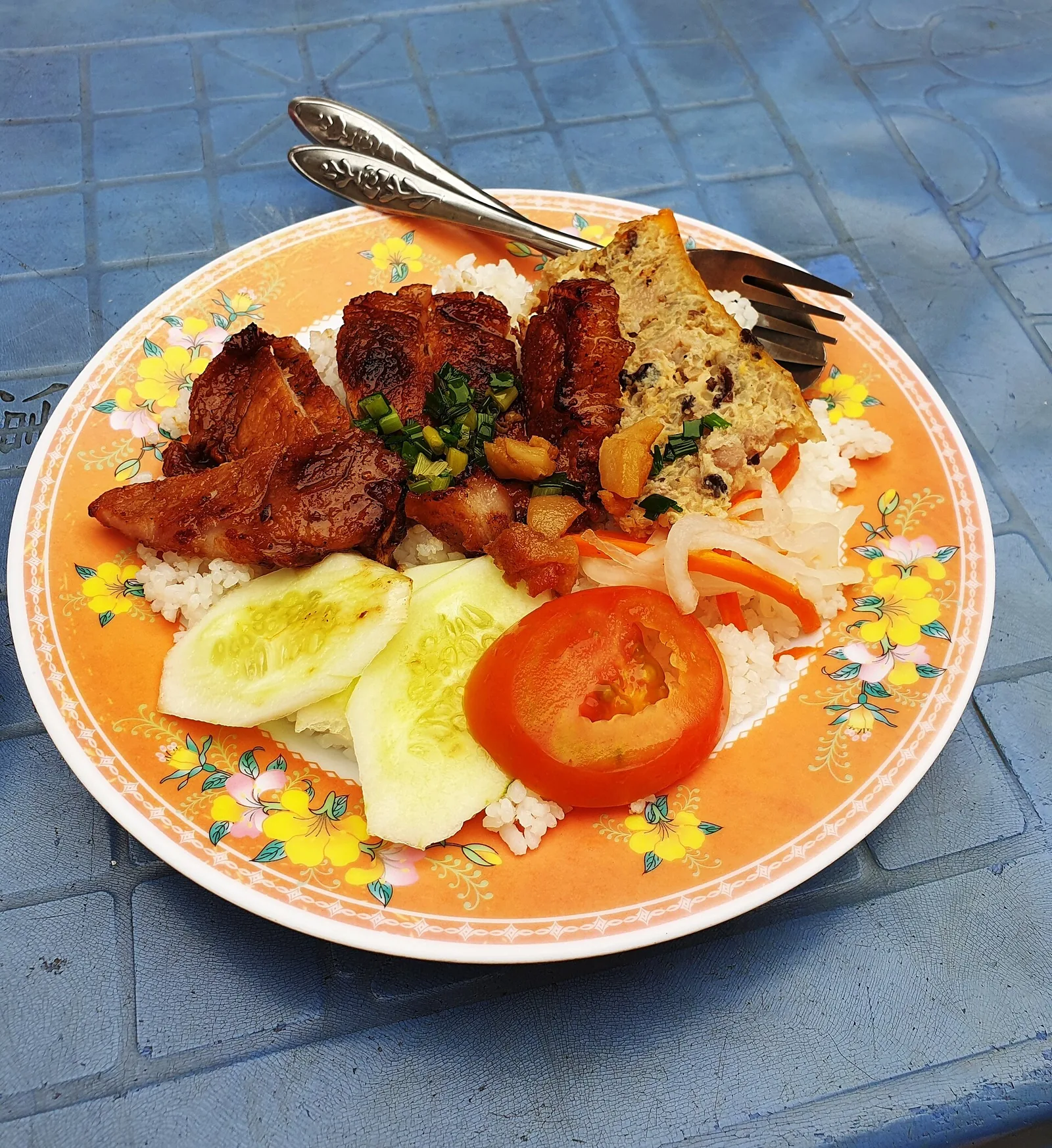
In Vietnamese cities, many people eat breakfast out, from a stall or a small shop near home or on the way to work. Tuoi Tre News explains that Vietnamese people generally eat out regularly for breakfast, for the variety, the time it saves and the company. The bowl or plate might be phở, bún bò Huế, bánh mì, sticky rice (xôi), rolled rice sheets (bánh cuốn) or broken rice (cơm tấm).
What is on offer changes from Hanoi to Huế to Saigon, and so does how people argue about it.
Early, and often on a plastic stool
The morning starts early. Associate Professor Phạm Ngọc Trung told VnExpress International that the country's tropical climate encourages people to start work early, and that the range of breakfasts reflects its geography, climate and farming traditions. The same piece describes vendors in nearly every alley, people eating while commuting, even on the back of a motorbike, and others gathered on small plastic stools to eat and chat before work.
At some stalls, breakfast also ends early. A Russian resident quoted by Tuoi Tre News says some places only sell breakfast until 7, 8 or 9 am, and then stop.
The people in the first Tuoi Tre piece show why eating out fits the day. A student in Ho Chi Minh City says she has no time to cook because classes start at 6:30 am. A migrant goes to the same bún riêu stall each morning to hear other people's stories and what is going on around him. Not everyone eats out: one woman and her aunt get up at 5:00 am to cook, because the children need their plates ready at 6:00 to get to school on time.
The breakfast trade is large. In the first quarter of 2017, breakfast made up 30% of 328.6 million visits to food outlets, according to Decision Lab figures reported by Vietcetera. It is also cheap: VnExpress International puts a street breakfast at VND20,000 to 60,000 (about US$0.80 to 2.30).
At one junction in Bình Thạnh, Ho Chi Minh City, where Nguyễn Văn Đậu meets Hoàng Hoa Thám, Tuoi Tre lists sticky rice, phở, bún bò Huế, bún riêu cua and cơm tấm sườn, and says a passer-by might grab a bánh mì or bánh bao instead.
Phở, and the Hanoi-Saigon argument
Phở is rice noodle soup, usually with beef (phở bò) and sometimes chicken (phở gà). It was first sold by street vendors as a snack at dawn and dusk.
The broth is where north and south part ways. Northern phở uses a savoury, clear broth; southern broth is sweeter and cloudier, and the southern bowl adds Thai basil and bean sprouts.
Writing for Vietcetera, Jennifer Nguyen describes a debate without a verdict. In Hanoi the broth is clear "like rainwater", with onion and herbs in the bowl and fried dough sticks (quẩy) on the side. In Saigon the bowl arrives with a plate of mint, basil, culantro, bean sprouts, rice paddy herbs and more, and sauces wait on the table. Some Hanoians find the Saigon bowl too much; some Saigonese find Hanoi's rather bland.
Bánh mì and xôi
The baguette arrived with the French in the mid-19th century, and a distinctly Vietnamese style of sandwich developed in Saigon in the 1950s. In Vietnam, bread rolls and sandwiches are typically eaten for breakfast or as a snack. A common filling is chả lụa (pork sausage) with coriander, cucumber and pickled carrot and daikon, plus pâté, chili and mayonnaise. The morning version is bánh mì ốp la: fried eggs with onions and a sprinkle of soy sauce, sometimes with butter.
Sticky rice is the other thing to carry away in one hand. The Vietnam News Agency calls xôi a quick fix for an empty stomach and a breakfast favourite. Toppings run from sesame and peanuts to liver pâté, sausage, fried eggs and char siu. Some sellers still offer to wrap it in a banana leaf, though foam boxes and plastic are common now.
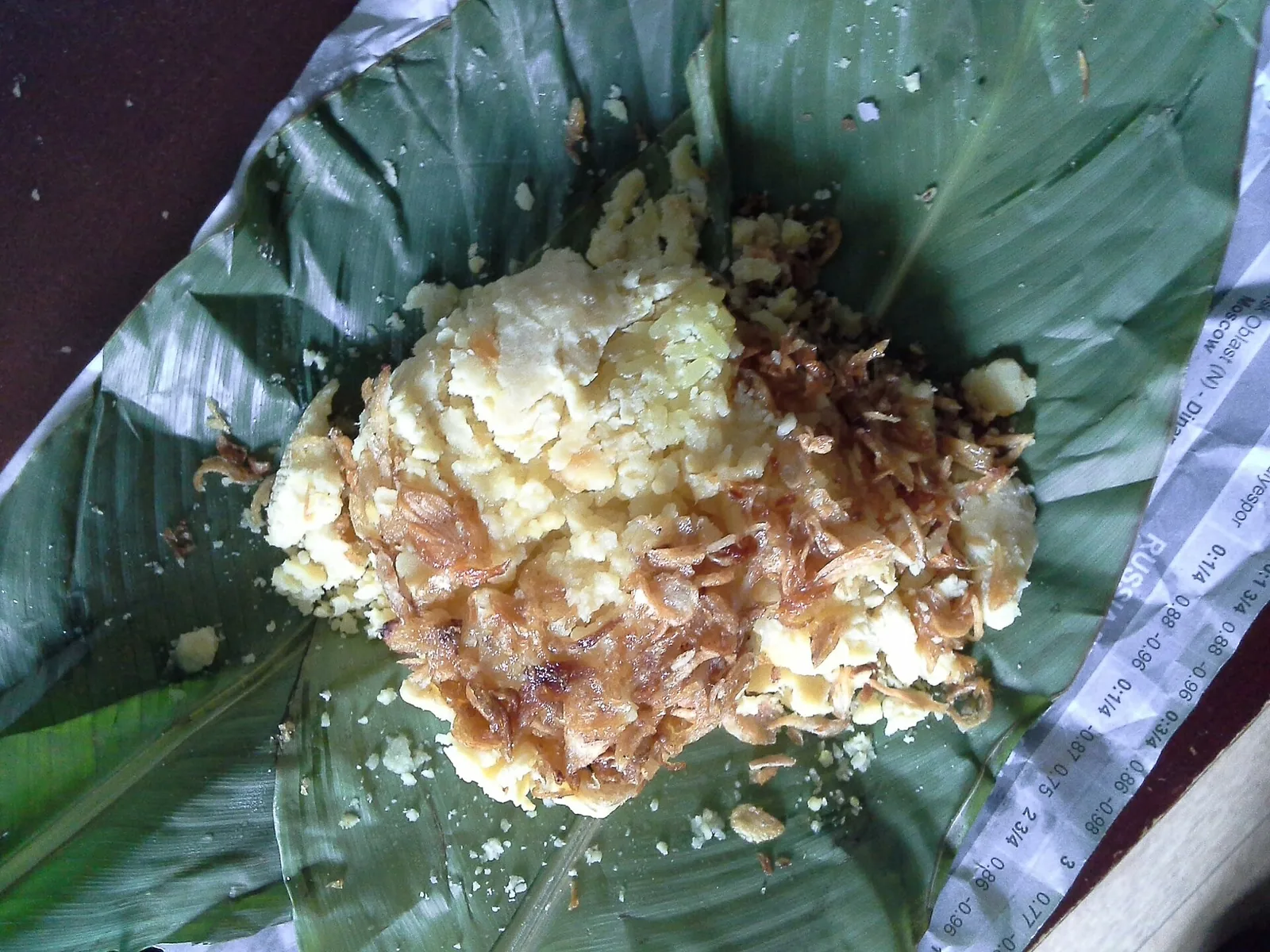
One version is xôi xéo, sticky rice with smashed mung beans and fried onions.
Bánh cuốn in Hanoi
Bánh cuốn are thin steamed rice sheets. The everyday kind, Viet Nam News writes, is filled with minced pork and wood ear mushroom and served with fried tofu or chả, and it stays one of Hanoi's best-known street foods.
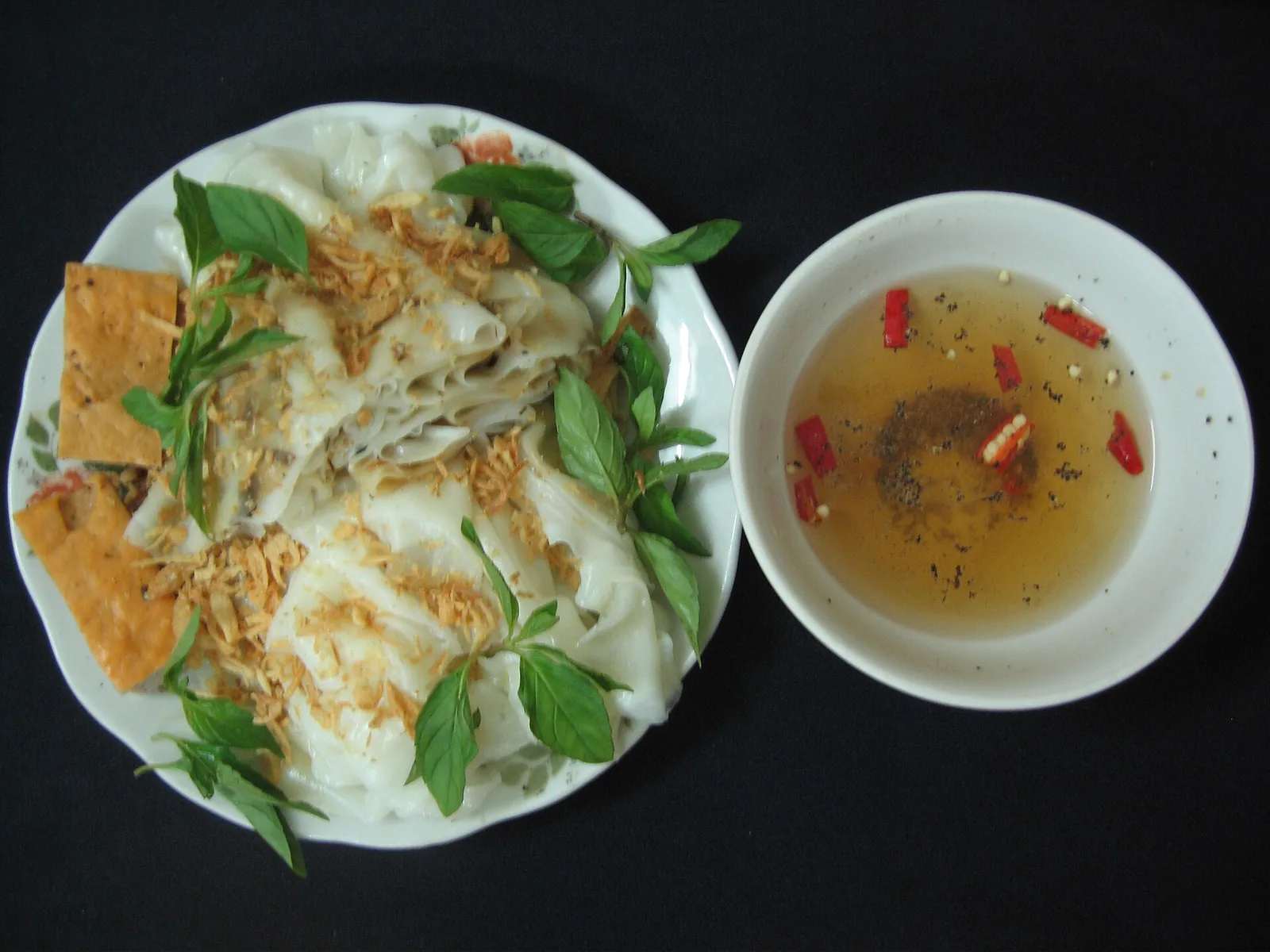
The Thanh Trì style is different. Vietnam Pictorial calls it an iconic breakfast dish for Hanoians: thin sheets, plain or almost plain, eaten cool, with cinnamon pork sausage (chả quế), fried shallots and a sweet and sour dipping sauce. In March 2026 it was listed as national intangible cultural heritage. Saigoneer describes the sheets as pure, freshly steamed rice wraps, dished up cool, the traditional Thanh Trì way. Filled, or cool and plain: two ways to eat the same sheets.
Bún bò Huế, cơm tấm and bò né
Bún bò Huế comes from the city of Huế. Its main flavours are lemongrass and shrimp paste, and the noodles are thick and round.
In Saigon, the plate on the cover is cơm tấm, broken rice. It was once eaten in lean years in the Mekong Delta and is now part of everyday Saigon life, served with grilled pork, shredded pork skin, egg meatloaf or a fried egg, and sweet and sour fish sauce. Wikipedia's cơm tấm entry puts it this way: Saigon people eat cơm tấm like Hanoi people eat phở.
At a market in Đà Nẵng, VnExpress International describes bò né, a sizzling breakfast dish of beef, eggs and bread, at around VND50,000 (US$2) a serving.
Coffee through a phin
Then there is the coffee. Cà phê sữa đá is made by pouring hot water through a metal filter called a phin, usually over dark-roast robusta, into condensed milk, and then over ice.
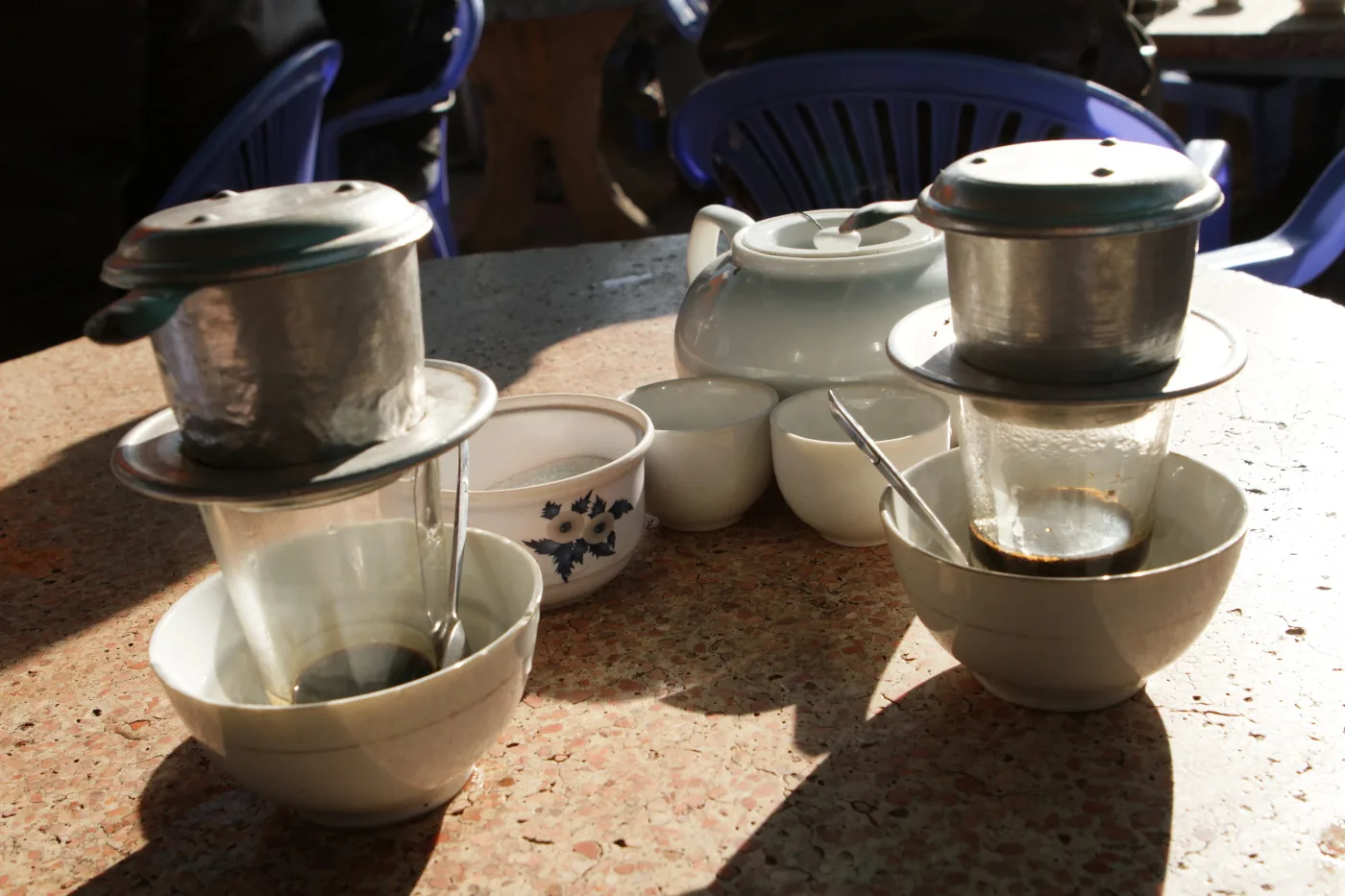
Hanoi has its own: egg coffee, egg yolks whipped with sugar and condensed milk over robusta. The son of Nguyễn Văn Giảng, of Café Giảng in Hanoi, claims that his father developed the recipe.
What is missing at your table?
This is a first sketch, pieced together from Vietnamese newspapers, food writers and reference works. Almost all of it comes from Hanoi and Ho Chi Minh City. It says little about breakfast in the countryside, in the Mekong Delta or the highlands, or in the kitchens of families who cook every morning.
If you grew up in Vietnam, or cook for a Vietnamese household now: what did this leave out? Is your phở clear or full of herbs, is it a breakfast food or an all-day one, and do you still get your xôi in a banana leaf? Corrections and additions are welcome, and good ones will be added to this page, with your permission and credit.
What is on your breakfast table this morning?
On peeka you pick a question and answer it with a photo. See how people around the world answer, and add yours.

Can't wait? Join the iPhone beta on TestFlight.