What do Nigerians eat for breakfast?
Many Nigerian breakfasts are akara, pap and bread: fried bean cakes, fermented corn or millet porridge, and a sweet loaf with "tea" that is often Milo. What each one is, how the north differs, and what Saturday brings.
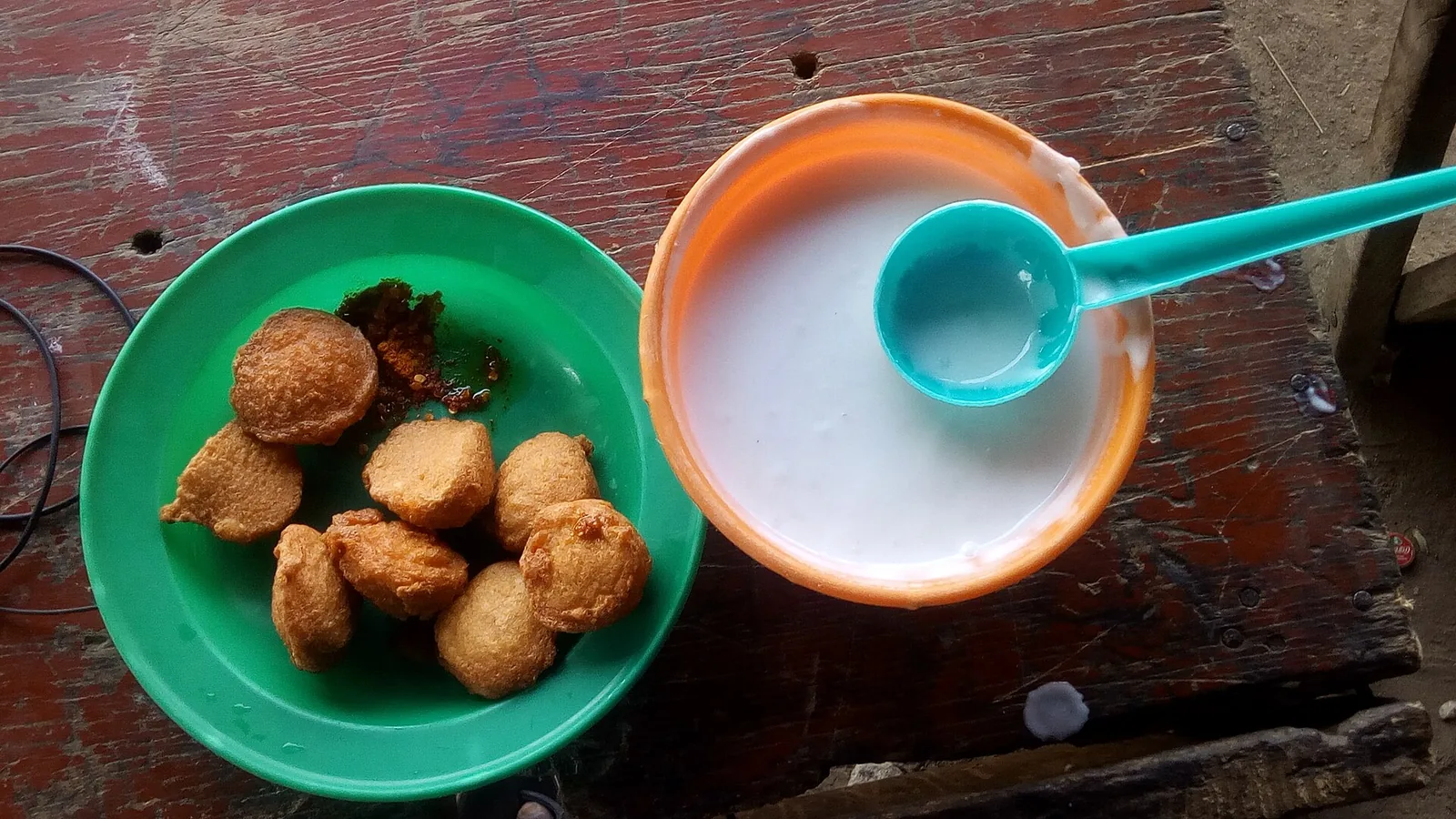
A common Nigerian breakfast is akara, fried bean cakes, eaten with bread or with pap, a fermented porridge of corn, sorghum or millet. In Lagos, NPR calls akara one of the most ubiquitous roadside breakfast staples. Akara is often eaten with bread, and the cup beside it holds what many Nigerians call "tea".
What else lands on the plate depends a lot on where you are. In the north there is koko and waina, and Saturday morning can mean pap.
Akara at the roadside
Akara is made from blended beans, chopped onions and spices, then deep-fried. The cover photo shows a plate of it next to a bowl the uploader labels kunu.
NPR spent a morning with Vivian Ozowar, who sells akara in Lagos. She gets up at 4 or 5 a.m. to clean, prepare her beans and start frying. Sometimes she serves it plain, sometimes in a sandwich, wrapped in bread, or with ogi.
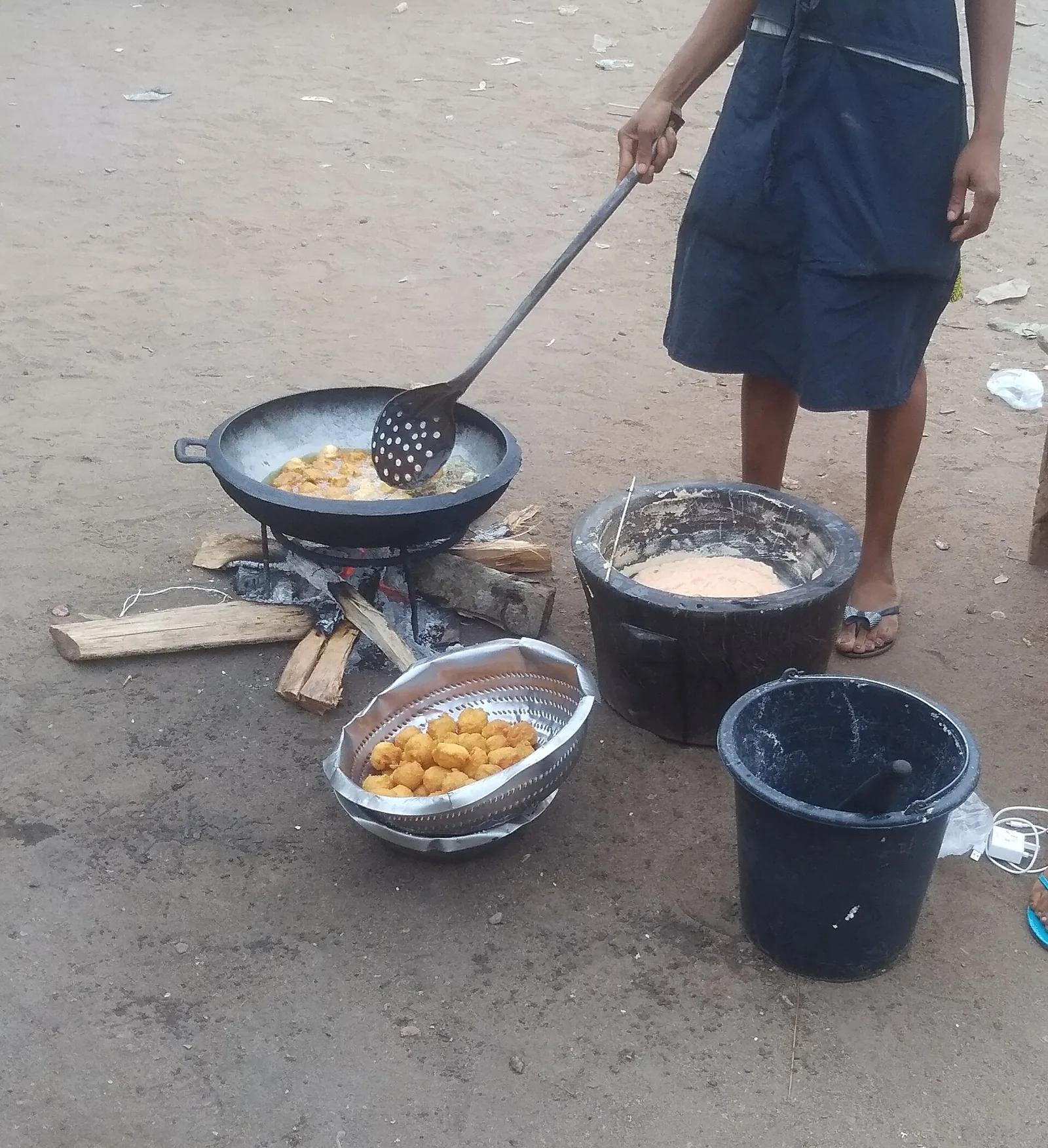
The photo above was taken at 7:37 in the morning, at a roadside pan frying akara to sell. In Hausa the same fritter is called kosai, and across Nigeria it is commonly eaten with bread, custard or ogi. The dish also crossed the Atlantic: in parts of South America it is acarajé.
Pap: ogi, akamu or koko
Pap is one food with several names. It is a fermented porridge typically made from maize, sorghum or millet, known as koko to the Hausa, akamu to the Igbo and ogi to the Yoruba.
It is eaten for breakfast or dinner, and may be sweetened with sugar or honey. On the side go moin moin, akara or bread. Leave it to set into a firm, jelly-like block and it becomes eko or agidi.
By Zikoko's reckoning, weekends change the menu. In its piece on weekend food, pap is a "Saturday morning delicacy". Yam is on the weekend list too, sometimes with fried eggs.
Breakfast in the north
Daily Trust, writing about breakfast "Arewa style", describes "Koko, a kind of pap, sweetened or not depending on your taste buds", paired with kosai, "or Akara, if that's more your thing". Koko is also a favourite during Ramadan.
The same piece describes waina. A batter of corn flour or ground rice is poured into a tanda, an oiled clay surface with a fire underneath, and the drink to go with it is kunun zaki. Wikipedia's masa page lists waina as another name for the dish, gives its ingredients as rice, yeast, baking soda and yoghurt, and says it is eaten in northern Nigeria and in some parts of the west.
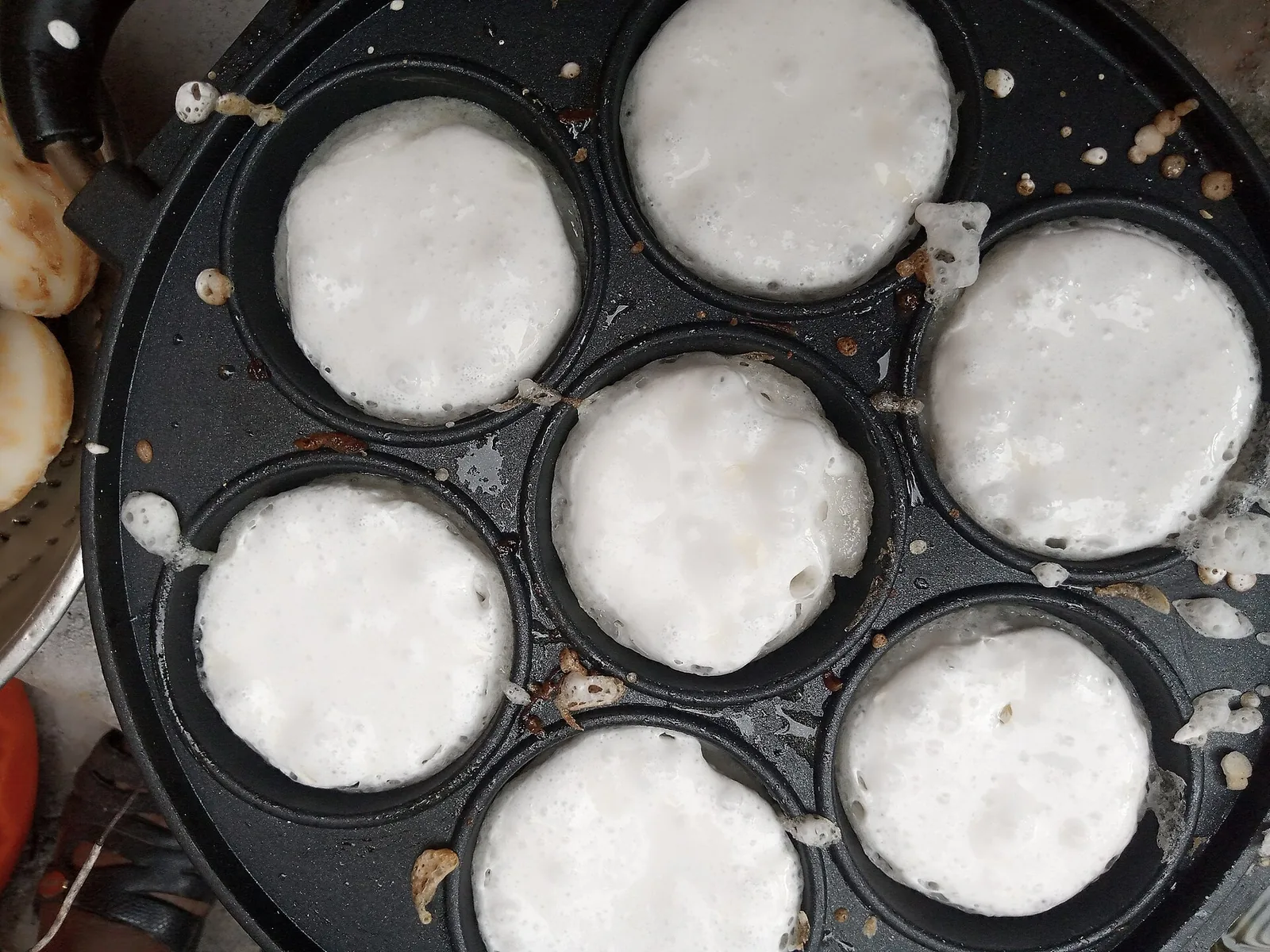
This waina was cooking in Bauchi State, in a modern dimpled metal pan rather than a clay tanda.
Daily Trust also lists dumame: the tuwo, made of rice or maize, left over from the previous night's dinner and warmed up for the morning.
Okpa at break time
One Zikoko piece calls okpa, made from bambara nuts and palm oil, part of Igbo tradition in Enugu. Its interviewee, at secondary school in Nsukka, bought it every day at break time. The writer, who grew up in Abuja, remembers women at street corners with okpa stacked in transparent nylon bags in their basins.
Bread, and "tea" that is often Milo
In an essay for Brittle Paper, Foyin Ejilola remembers that there was always bread at home, "as opposed to rice in many Nigerian homes". She calls it the perfect school breakfast and the best partner for moin-moin, akara or fried eggs. She also writes that how a family was doing could be measured by how often it bought bread, and which kind.
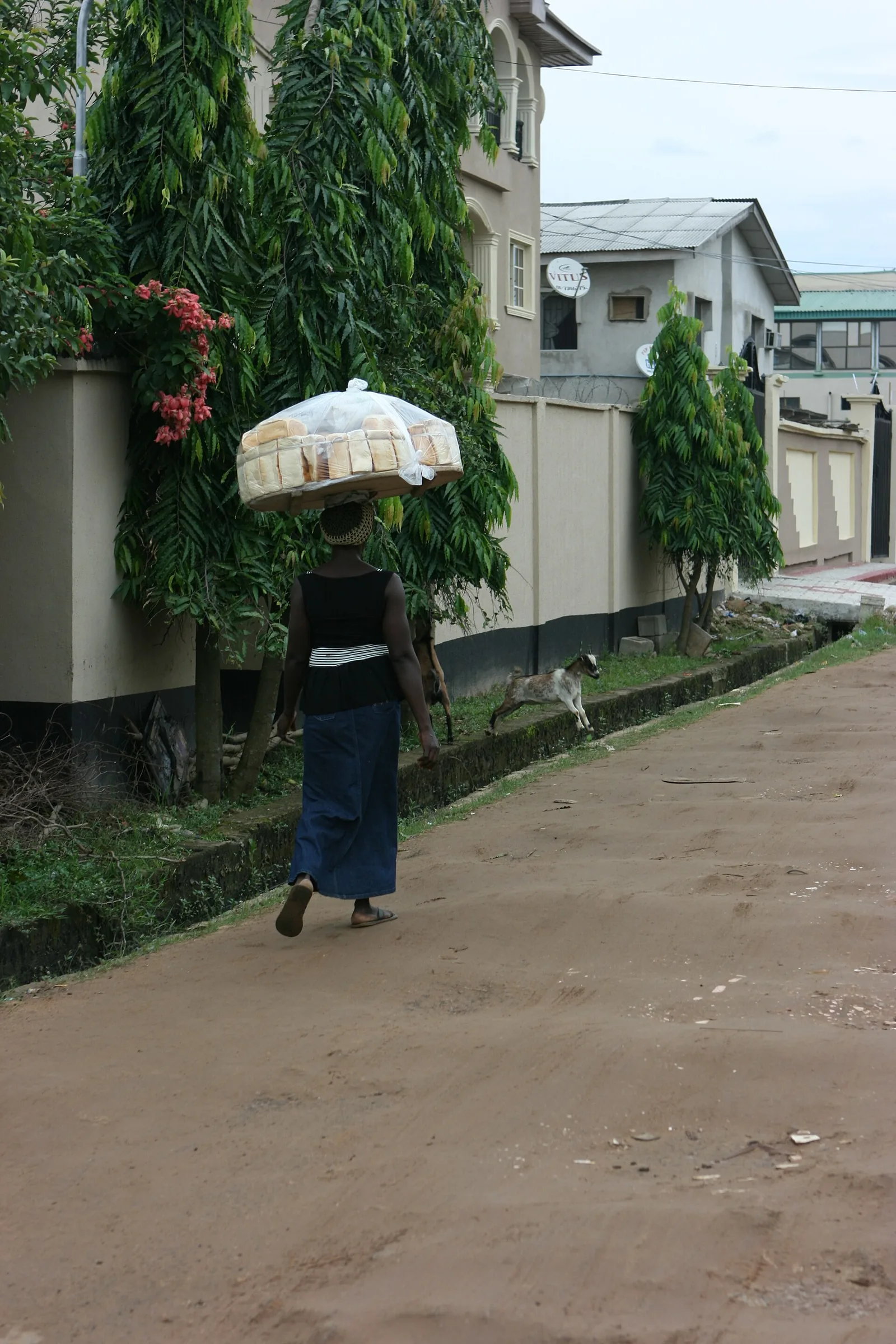
Often the loaf is Agege bread, a sweet, yeasted white bread from Agege in Lagos. Street vendors and markets sell it, and it is commonly eaten with akara or with ewa aganyin.
Ewa aganyin (also spelled agoyin) is beans cooked until extremely soft and then mashed, topped with a palm-oil pepper sauce and typically served with Agege bread.
What goes best with bread is argued over. When Zikoko ranked Nigerian bread pairings, sardine bread was "the travesty" and bread with egg sauce took the top spot.
Then there is the cup. Eat Drink Lagos points out that what Nigerians call "tea" is actually a cocoa beverage, such as Milo or Bournvita, and that whatever was served for breakfast came with tea.
What breakfast costs
Breakfast has also been in the news. In 2026, after comments by First Lady Remi Tinubu sparked widespread outrage, akara became, in NPR's words, an unlikely symbol of the cost-of-living crisis across the country.
National Bureau of Statistics figures reported by Ripples Nigeria show the average price of sliced bread went from ₦684.85 in August 2023 to ₦1,459.85 in August 2024, up 113.16%. Prices also differed by state: in August 2024 sliced bread was dearest in Rivers, at ₦1,850, and cheapest in Yobe, at ₦908.81.
Year-on-year food inflation stood at 19.59% in September 2026, and Legit.ng reported Lagos with the highest annual food inflation, at 34.4%.
What is missing at your table?
This is a first sketch, put together from Nigerian newspapers, food writers and reference works. Much of it comes from Lagos and the north. It says little about breakfast in the Niger Delta, in the middle belt, or in the kitchens of families who cook something else every morning, and the names change from one language to the next.
If you grew up in Nigeria, or cook for a Nigerian household now: what did this leave out? Do you call it ogi, akamu or koko, do you buy your akara at the roadside or fry it at home, and is the "tea" in your house Milo, Bournvita or actual tea? Corrections and additions are welcome, and good ones will be added to this page, with your permission and credit.
What goes in your cup at breakfast?
On peeka you pick a question and answer it with a photo. See how people around the world answer, and add yours.

Can't wait? Join the iPhone beta on TestFlight.