What do Mexicans eat for breakfast?
Many Mexican families start with coffee or atole and bread, and eat a substantial meal later, mid-morning, as almuerzo: eggs, beans, salsa and tortillas. It covers chilaquiles, regional eggs, molletes, pan dulce, street tamales and how the weekend changes it.
In many Mexican households the first meal of the day is light: coffee or atole, a hot maize drink, often with a piece of bread. As María Meléndez writes in Mexico News Daily, a substantial meal comes later, mid-morning, as almuerzo, which usually includes eggs, beans, salsa and tortillas. On weekends, almuerzo takes over the breakfast hours.
So the answer depends on the hour, the day of the week, and the region.
Desayuno, almuerzo, comida
The Mexican morning has more than one meal in it. Wikipedia describes a typical household eating four times a day: a light breakfast, then a light meal around 11 a.m., then comida, usually the heaviest meal of the day, somewhere between noon and 2 p.m., and supper in the evening. Rough Guides puts that main meal around 2 p.m. or later, so the hours shift from home to home.
The word that confuses visitors is almuerzo. It is easy to read it as lunch, but in Mexico it is a light meal eaten before midday, somewhere in the middle of the morning. El Colegio de México's dictionary adds that it is eaten in the morning or after midday depending on the region and on a person's job.
What goes into it: usually an egg dish, with coffee, coffee with milk or juice, and tortillas, bread and salsas on the table.
Meléndez remembers that for many parents and grandparents, and still in rural areas, breakfast was only a cup of coffee and a piece of bread. A substantial meal came later, as almuerzo.
Weekdays and weekends
On workdays in the cities, that two-step morning has faded. Meléndez notes that many employers are not keen on staff leaving the office twice before lunch. On weekends it comes back: almuerzo takes over the breakfast hours and becomes time spent with family and friends.
Not everyone describes the first meal as light. In a 2013 Afar guide, chef Pati Jinich said that during the week Mexicans have fresh orange juice, eggs and fruit, and that weekend breakfast is like a very generous brunch. Another summary calls breakfast in Mexico usually large, and sometimes the main or second-largest meal of the day. Households differ, and a cup of coffee with bread and a full plate of eggs can both be breakfast on the same street.
Chilaquiles: red or green, crunchy or soggy
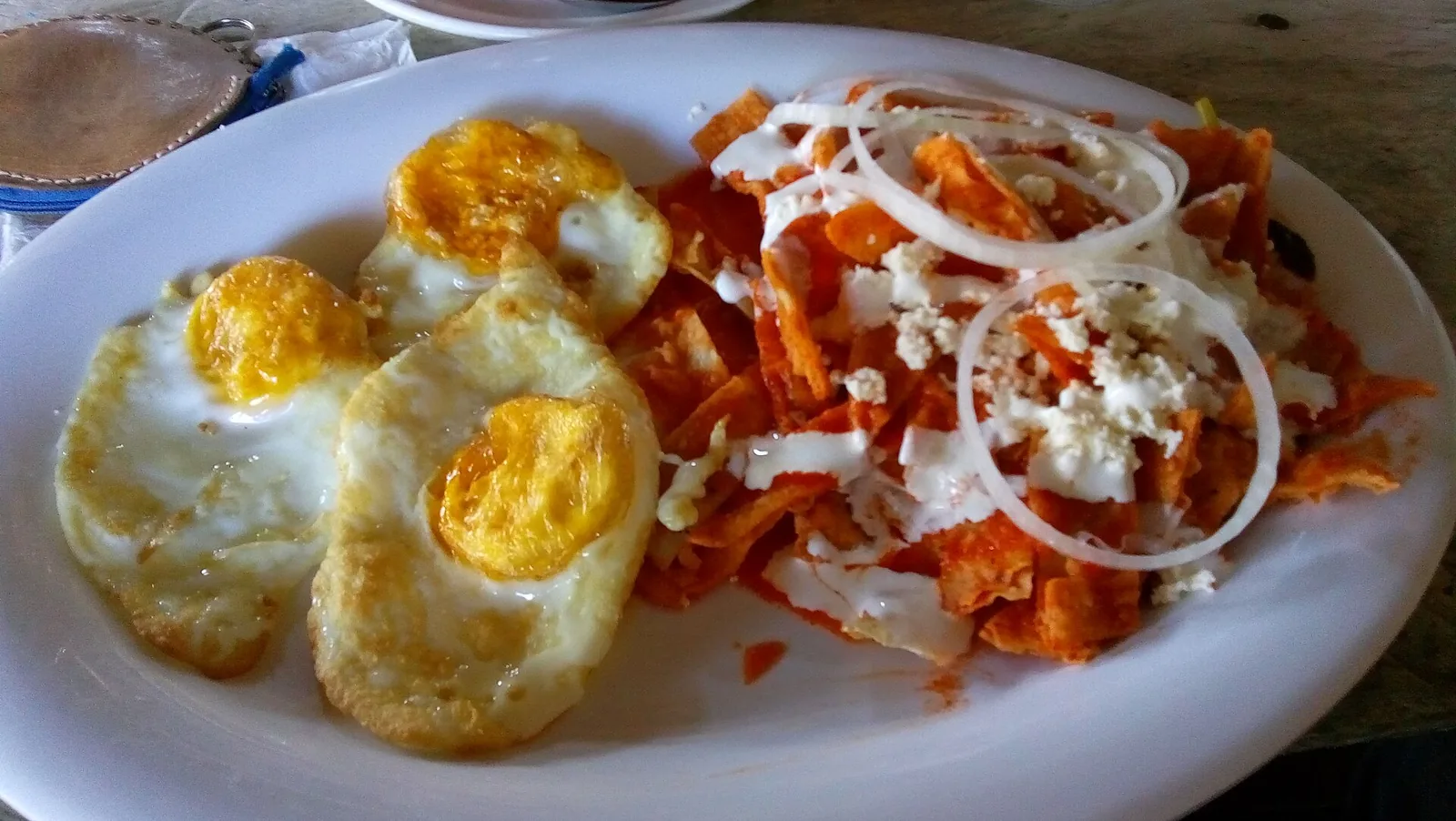
One dish many people picture is chilaquiles: pieces of tortilla in red or green salsa, usually eaten at breakfast or brunch and topped with crema, crumbled queso fresco (a fresh white cheese), sliced onion and avocado. The cover photo shows them red, with two fried eggs on top.
The sauce has a geography. In Mexico City green is the usual choice; in Oaxaca cooks use yellow mole, and tlayudas in place of corn chips. El Universal adds that chilaquiles are mostly a breakfast dish and usually come with beans.
So does the texture. In central Mexico the chips often stay crisp, while in Guadalajara they are simmered until thick, closer to polenta.
This is an old argument. Yazmín Navarro of SDP Noticias points out that the first recorded recipe, from 1821, was soggy, and that soggy chilaquiles are getting harder to find in restaurants and cocinas económicas, small everyday eateries.
Eggs that change with the region
Eggs are the backbone of almuerzo, and each region has its own. Meléndez lists huevos con machaca as the classic in the north, huevos con chaya in the Yucatán Peninsula, and chilaquiles with fried eggs in central Mexico. In Oaxaca, she writes, huevos zapateros are also a remedy for colds and hangovers.
Machaca with eggs is a popular breakfast in northern Mexico, linked to miners in the state of Chihuahua.
From the town of Motul in Yucatán come huevos motuleños: eggs on tortillas with black beans and cheese.
Huevos rancheros are served in the style of the large mid-morning meal on rural farms. Their cousin, huevos divorciados ("divorced eggs"), puts two eggs on one plate, one under red salsa and one under green, an answer to the red-or-green question.
The list keeps going. Travel writer Tim Leffel says it is not unusual to see 15 or even 30 egg dishes on a restaurant's breakfast menu.
Eggs are not the only option either. Breakfast can also be meat in broth such as pancita, a tripe soup, or tacos, enchiladas, or meat with eggs. The Wikipedia article on Mexican cuisine notes that tacos are generally not treated as a main meal; they are mostly eaten before midday or late in the evening.
Molletes and pan dulce
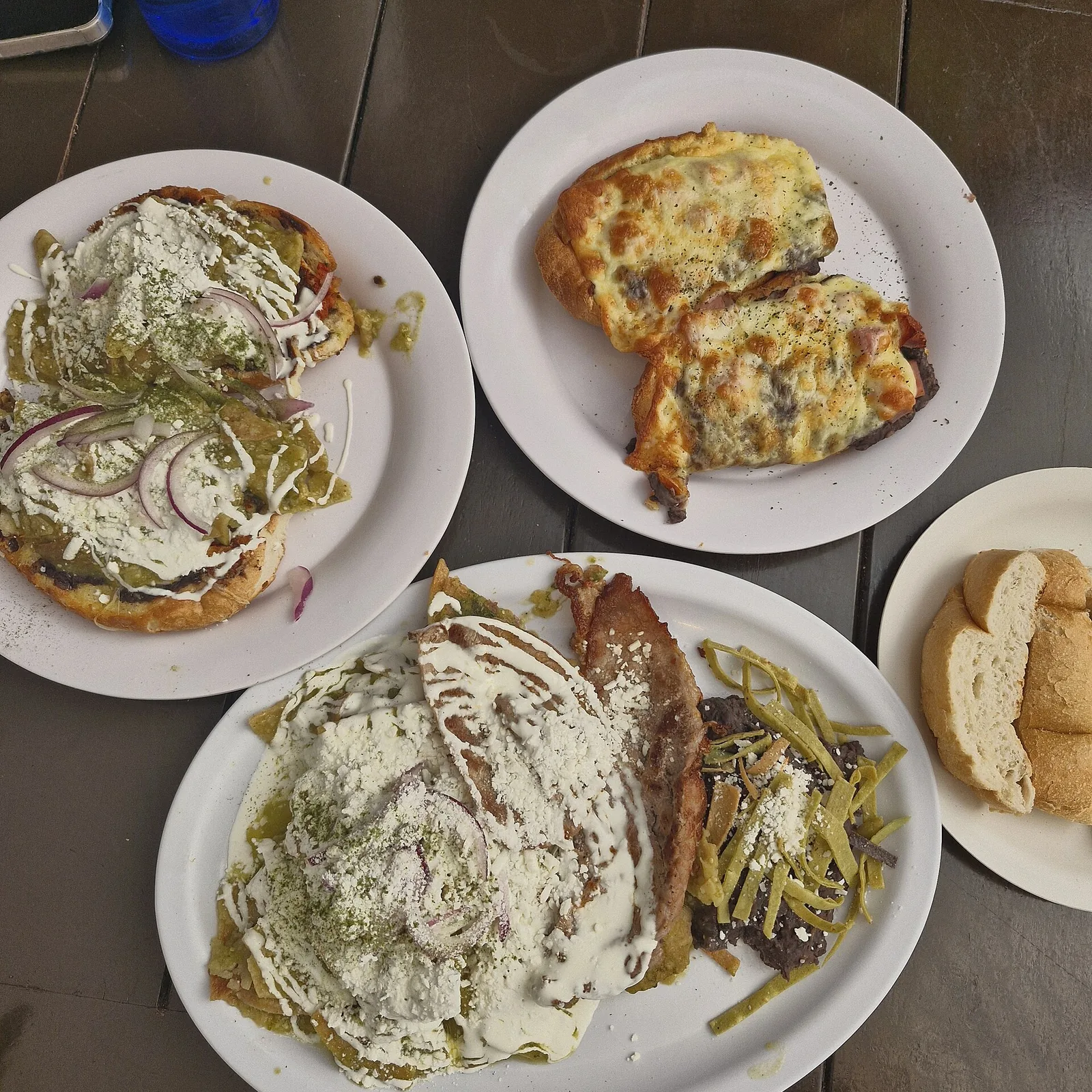
For something quick and cheap there are molletes: a bolillo roll split open, spread with refried beans and cheese, and baked. Wikipedia calls them a simple, inexpensive breakfast. In the photo below they sit next to a plate of chilaquiles.
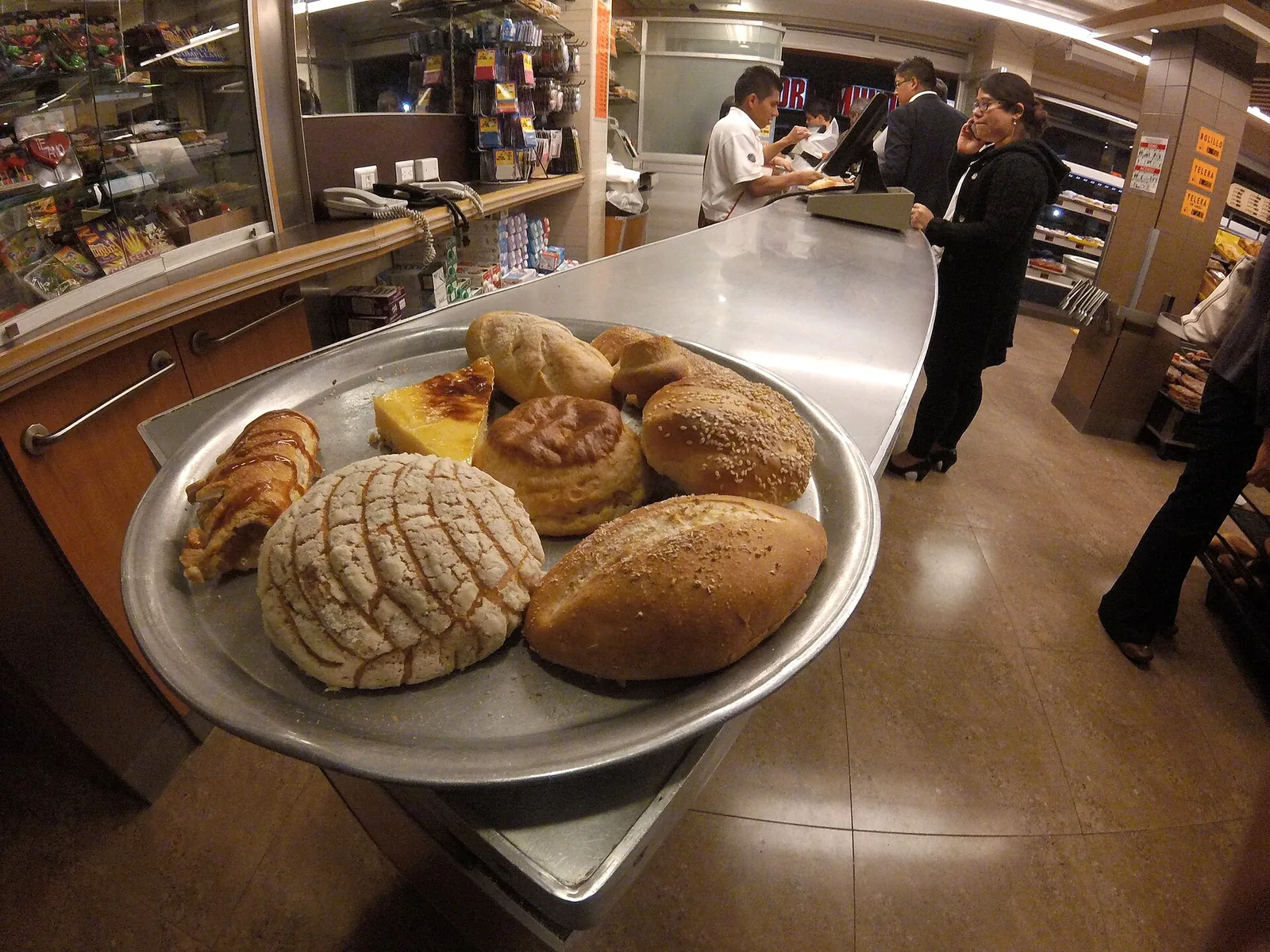
Then there is the sweet bread, pan dulce, bought at the panadería, the bakery. The concha is regularly eaten for breakfast with milk or coffee.
Breakfast from the street
Breakfast is also bought on the street. Leffel notes that street stands are busy in the mornings when their specialty is a breakfast food.
Tamales are one of them. They are eaten at both breakfast and dinner, often with atole, and vendors serve them from huge, steaming, covered pots. In Oaxaca, Chiapas, Veracruz and Yucatán they are wrapped in banana leaves. The most common fillings, according to Leffel, are chicken with green sauce or pork with red.
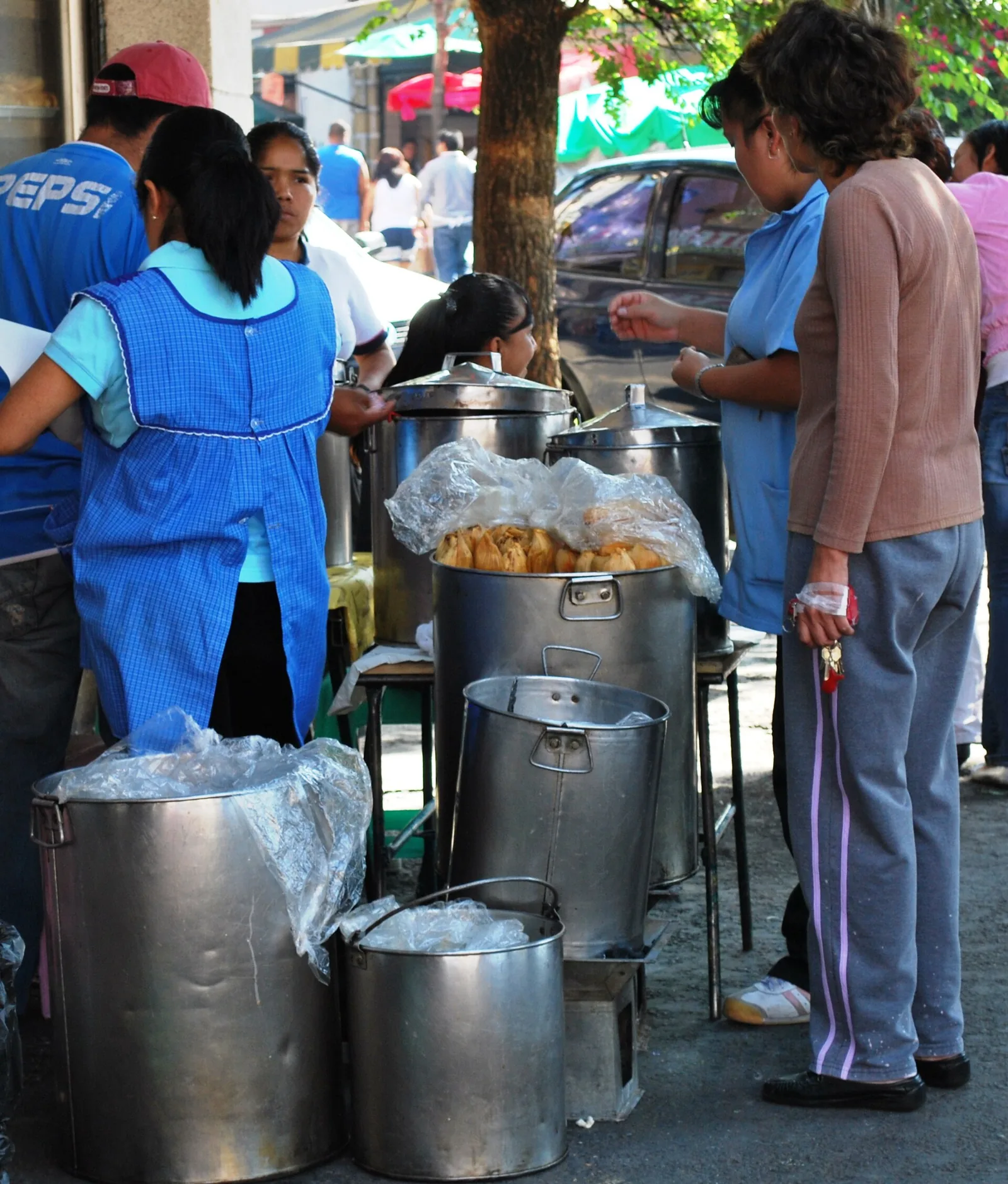
In Mexico City and the State of Mexico, a tamal can go one step further. The guajolota is a tamal placed inside a bolillo, a sandwich made from a tamal. It is sold on the street, especially near churches on Sunday mornings, and people often buy it with a cup of atole.
What outsiders often get wrong
One common mix-up is the breakfast burrito. It is an American breakfast, from New Mexican cuisine, meaning the US state of New Mexico.
The second is the word almuerzo itself. Read as lunch, it puts the eggs and salsa at the wrong hour of the day. In much of Mexico it is a mid-morning meal, though the time shifts with region and job, and comida comes after it.
The third is treating "Mexican breakfast" as one plate. The north, the Yucatán and Oaxaca each answer the question differently, and so do weekday and Sunday in the same house.
What is missing at your table?
This is a first sketch, pieced together from Mexican writers and cooks, travel writers and reference works. It cannot cover every state, every family, or the difference between your grandmother's almuerzo and your own Tuesday coffee.
If you grew up in Mexico, or cook for a Mexican household now: what did this leave out? Which region's breakfast is missing, are your chilaquiles crunchy or soggy, and what time does almuerzo really happen at your home? Corrections and additions are welcome, and good ones will be added to this page, with your permission and credit.
What is on your breakfast table this morning?
On peeka you pick a question and answer it with a photo. See how people around the world answer, and add yours.

Can't wait? Join the iPhone beta on TestFlight.