What does a typical Korean apartment look like?
Most Korean homes are apartments in large complexes. The most common family flat is 84 m² with three bedrooms and two bathrooms, a sunken entrance for shoes, a heated ondol floor, often an enclosed veranda for laundry, and in many homes a bathroom that is all shower.
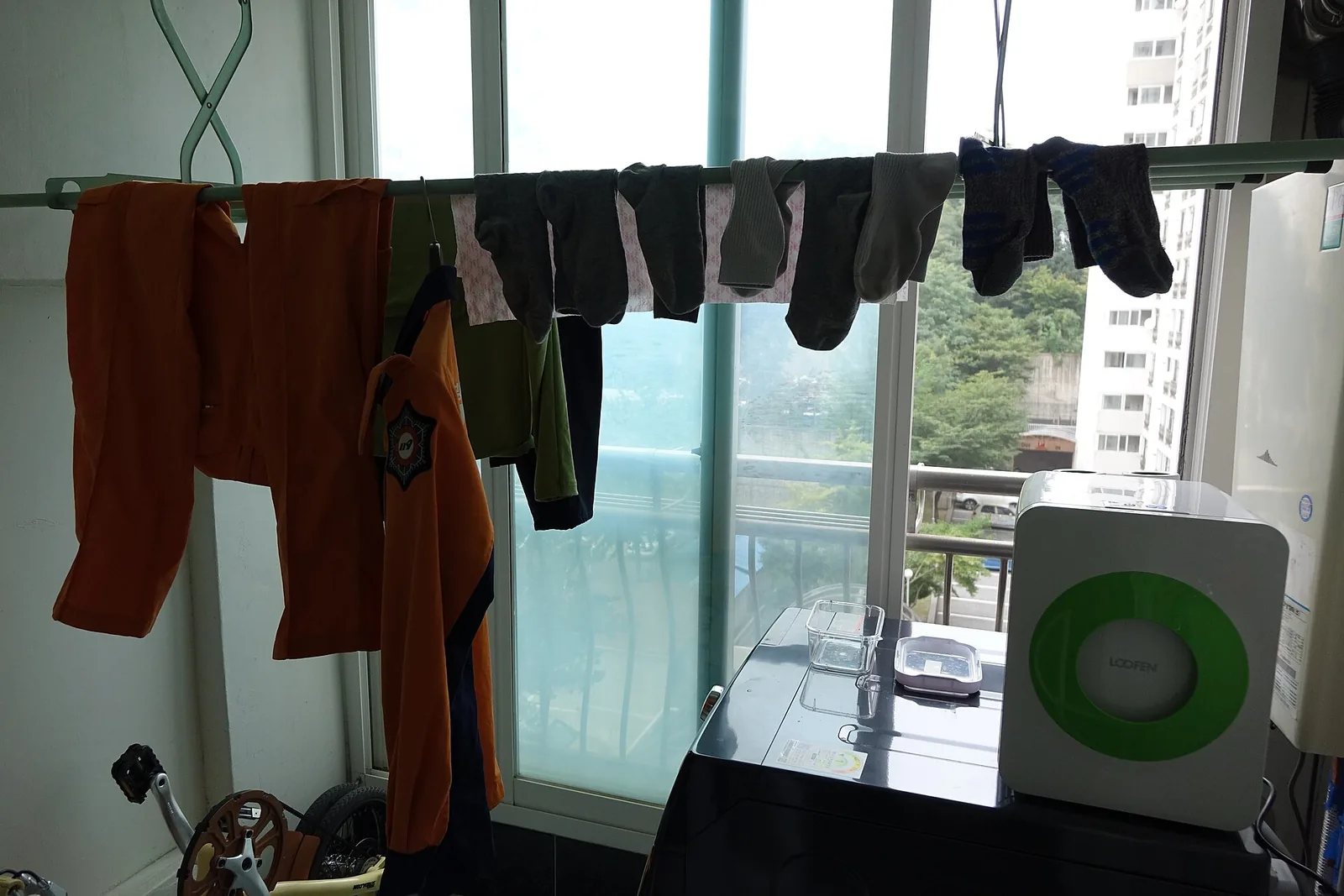
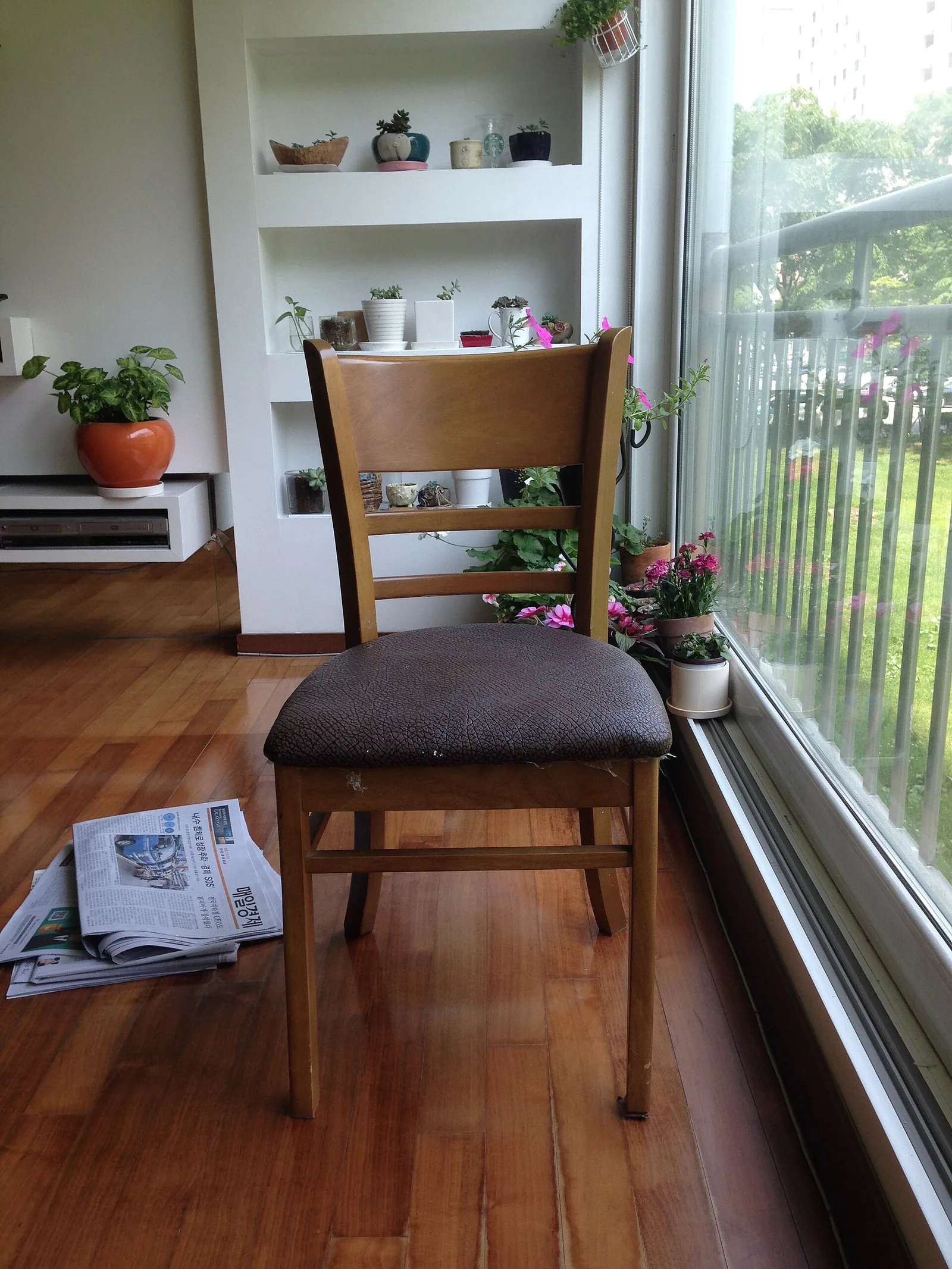
A typical Korean home is a flat in a high-rise apartment complex. The most common family flat is 84 square metres, usually with three bedrooms and two bathrooms. Inside, shoes come off before a raised step by the door, the floor is heated, laundry often dries on an enclosed veranda, and in many homes the whole bathroom works as the shower.
Most homes are apartments
In the 2025 census, Statistics Korea counted 54.5 percent of households living in an apartment. Counted by homes rather than by households, the share is higher: apartments were about 13.29 million homes, 65.8 percent of the total. The Korea Times, which calls apartment complexes the most preferred type of housing in Korea, notes that the share was 62.9 percent in 2020.
The share is not the same everywhere. In 2023 figures, Sejong had the highest apartment share at 87.1 percent and Jeju the lowest at 31.6 percent. Gwangju and Daejeon came next after Sejong.
Many households are one person: the same census counted 8.24 million single-person households, 36.6 percent of the total.
The danji
Koreans call the building an apateu, and a group of them a danji: a group of apartment buildings or a housing complex in a residential neighbourhood. A danji is more than towers. It usually has retail shops and a kindergarten, and the newer ones add a gym, a library and cafes.
Historian Andrei Lankov dates the real history of Korean apartments to the Mapo Apartment Complex in Seoul, built from 1961 to 1964, a few years after an earlier multi-storey complex went up in 1958. He describes ten six-storey buildings for 642 families, in flats of 30 to 50 square metres, and the first complex with modern flush toilets and sewage. The real boom in multi-storey housing, he writes, began in the early 1970s.
A law helped. The 1972 Housing Construction Promotion Act gave low-interest loans to builders of large complexes, and the identical unit sizes and brand names of those complexes standardised prices. By 2010, the JoongAng Daily wrote that apartments had become synonymous with Koreans' image of the good life. The same article quoted a critic of the sameness: Professor Lim Chang-bok said at the time that the interior of every apartment in Seoul, and even on Jeju Island, is the same.
84 square metres, the "national size"
Ask about a family flat and you will hear a number: 84. Koreans call it the "national size", gukmin pyeonghyeong. KB's real-estate guide explains that it goes back to a 1973 plan for a 25-pyeong home (a pyeong is an old unit of floor area), and that 85 square metres is still the line used for taxes and housing lotteries. The same flat shows up in listings as "34 pyeong", because the listing counts shared areas too.
Inside, the kitchen and dining area are one space, even in the largest homes. The cooker usually has two or three burners and runs on gas, with induction spreading. Built-in ovens are uncommon.
Shoes off at the door
The flat starts at a small entrance with a shoe closet and a slightly raised step leading into the home. Shoes come off down in the sunken part. A guest's shoes usually stay there rather than going into the closet, as the Institute for Basic Science's guide for foreign staff points out.
The habit is old. The floor used to be where people lived, and wearing shoes in the house is generally frowned upon.
A warm floor, and a sofa used as a backrest
The floor is warm because of ondol, floor heating that korea.net traces back to the Bronze Age. Since the floor was warm, people sat on it, ate on it and slept on it.
In a modern flat, ondol means hot water running under the floor. A small box, normally near the bedroom door, turns the heating on and off. People traditionally slept on thick floor mats called yo, and the same guide asks you not to walk on them, even in socks.
The living room looks familiar at first: a sofa, and opposite it a TV on a wide stand. But in many homes the sofa does a second job. The JoongAng Daily writes that a sofa in a Korean living room is not just for sitting on, but for using as a backrest: people sit on the warm floor and lean against it. Lee Ji-yon, 36, from Seoul, told the paper: "This position is a rule of thumb. If you are a real Korean, you'll know it and won't be able to get out of it."
The veranda
Many flats have an enclosed porch or two, used for storage, drying laundry or growing plants. This is often where the washing machine lives, next to a hookup and a floor drain. In newer flats, a drying rack comes down from the ceiling on a rope or by remote control.
Some families give up the veranda for floor space. Expanding the balcony into the living room was illegal before 2005 but common, and the government changed the law in 2005 to allow it. Today most model houses assume the balcony has been expanded.
The bathroom is the shower
In many Korean bathrooms there is no separate shower: the whole room is the shower, so shower curtains are very uncommon. The floor has a drain and sits a step down from the hallway, and a pair of shared slippers waits at the door. Some family flats have a bathtub; in homes built for one person, a tub is very rare.
One-rooms and officetels
Smaller homes have their own names. A studio is a "one-room", a flat with a separate bedroom a "two-room". An officetel is a hybrid commercial-residential unit, classified as quasi-housing under the Housing Act. Most come furnished with a fridge, air conditioner, washing machine and stove, but many have windows on only one side, which limits airflow.
Renting: jeonse and wolse
Renting a flat in Korea works in one of two ways. Under jeonse, the tenant pays a lump-sum deposit and no monthly rent, conventionally 60 to 70 percent of the home's value. The deposit is returned two years later. Under wolse, the tenant pays a deposit plus monthly rent.
Where do you sit at home in the evening, on the sofa or on the floor?
This is a first sketch, put together from census figures, Korean newspapers and a housing guide written for foreign researchers in Korea. It cannot cover how a Sejong tower differs from a house on Jeju, an officetel from a family flat, or how your own family arranges the living room.
If you live in Korea, or grew up there: what did this leave out? Did your family expand the balcony or keep it? Do shoes ever cross the step at your home? And does anyone actually sit on the sofa? Corrections and additions are welcome, and good ones will be added to this page, with your permission and credit.
Where do you sit at home in the evening, on the sofa or on the floor?
On peeka you pick a question and answer it with a photo. See how people around the world answer, and add yours.

Can't wait? Join the iPhone beta on TestFlight.