What do Filipinos eat for breakfast?
In the Philippines breakfast usually means rice, boiled or fried, with fish or egg and coffee. Silog plates, pandesal from the morning bakery, champorado with dried fish, lugaw, taho from street vendors, and what Cebu and Mindanao eat.
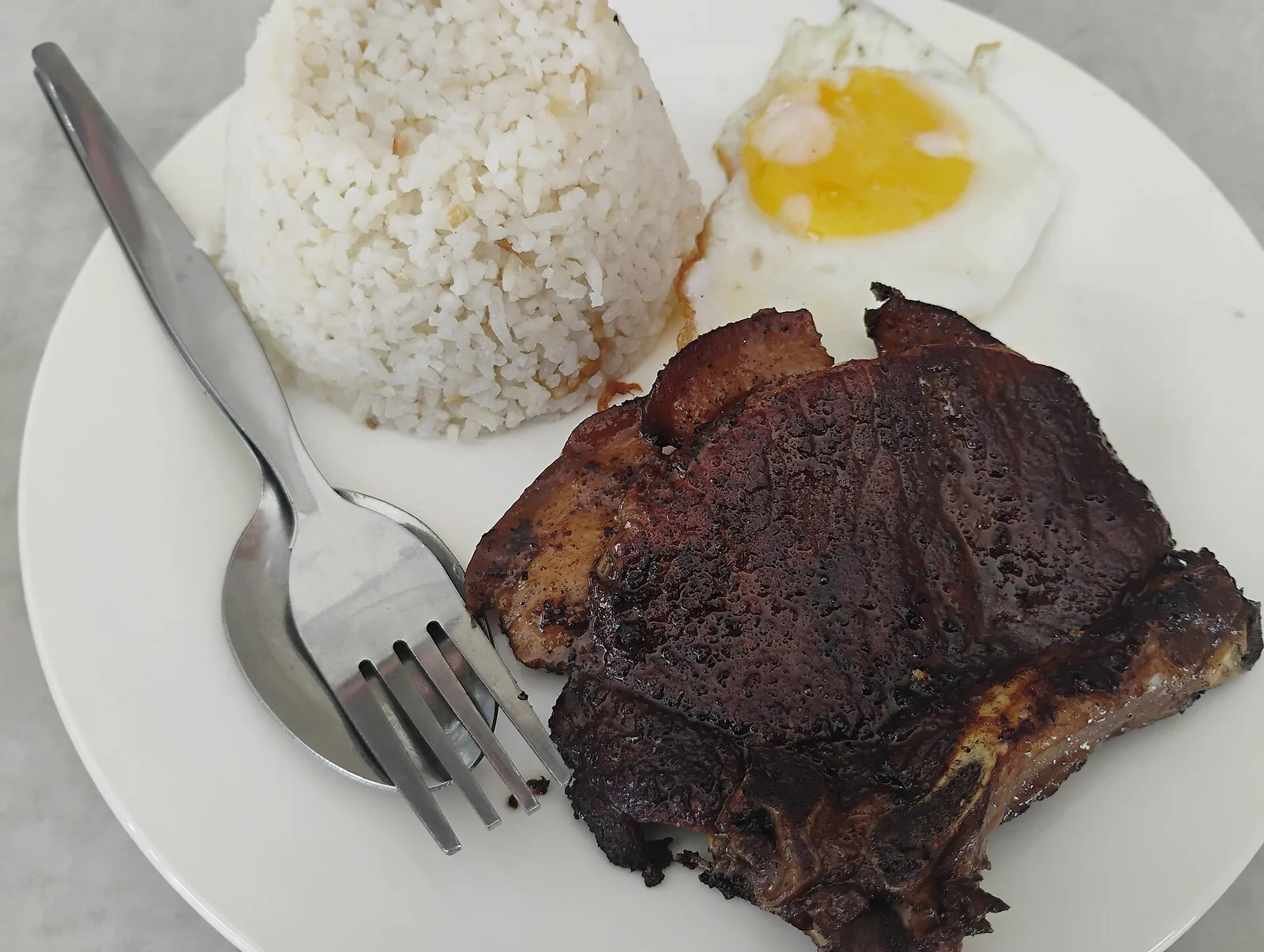
In the Philippines, breakfast usually starts with rice: plain, or fried with garlic in a silog plate with an egg. Pandesal and coffee come alongside, or instead. A 2013 study found that rice, boiled or fried, was the main staple for both rural and urban participants, with bread, crackers or oats as the alternatives. Earlier studies, cited in a 2022 analysis of the 2018 national nutrition survey, describe the national pattern as rice, bread, fish, egg and coffee.
What sits next to the rice depends on the household, the budget and the island.
Agahan or almusal
There are two words for the meal. Agahan comes from umaga, morning, and almusal was borrowed from Spanish, as SBS Filipino explains.
Most people eat it. That analysis of the 2018 survey found that 96 to 98 percent of Filipinos regularly eat breakfast, though skipping it was more common in rural areas.
Money and the fridge shape the plate. Writing for Umami Days, Connie Veneracion notes that in rural homes dried fish often comes with the rice, because it keeps without refrigeration. In busy city homes breakfast may be a pack of instant noodles from the microwave, a can of meat, or cereal with milk. In the provinces, she writes, the mother, grandmother and aunts are often still in the kitchen at dawn.
Silog: garlic rice, egg, and one more thing
The plate on the cover belongs to a whole family. Silog is a class of Filipino breakfast dishes: garlic fried rice (sinangag) and egg (itlog), served with one named dish. That dish gives the plate its name. Tapa with sinangag and itlog becomes tapsilog; with longganisa sausage it is longsilog, with sweet cured tocino it is tocilog, with milkfish (bangus) it is bangsilog.
The rice itself is usually leftover rice from the day before, fried with garlic and not much else. At home the plate gets simpler. Writing for SBS Food, Melissa Fox says she makes tocilog regularly, with rice cooked and chilled the day before.
Tapa is usually cured beef, marinated in soy sauce, calamansi and garlic, and SBS Filipino notes that some Filipinos prefer longganisa, tocino or fried bangus. It is not beef everywhere, though. In Taal, Batangas, tapa is pork: culinary historian Dindo Montenegro told SBS that tapang Taal began with a surplus of native pigs in Taal in the early 1950s.
Longganisa starts a different argument. Some are sweet (hamonado), some garlicky (de recado), and many towns have their own: Vigan, Alaminos, Cabanatuan with beef, and Lucban in Quezon, known for its oregano. Philippine longganisa is traditionally a breakfast sausage, eaten with sinangag.
Silog does not stop at morning. In Mandaluyong, Metro Manila, Kanto Freestyle Breakfast stays open 24 hours and is a classic stop for night-shift workers and students chasing deadlines, people whose breakfast comes at midnight.
Pandesal and coffee
The other half of the morning comes from the bakery. Pandesal is a bread roll commonly eaten for breakfast, often dipped in coffee, tsokolate (hot chocolate) or milk. Most bakeries bake it in the morning for breakfast, though some keep baking all day. Its precursor, pan de suelo, was baked directly on the floor of a wood-fired oven called a pugón; baking pandesal in a pugón has since declined.
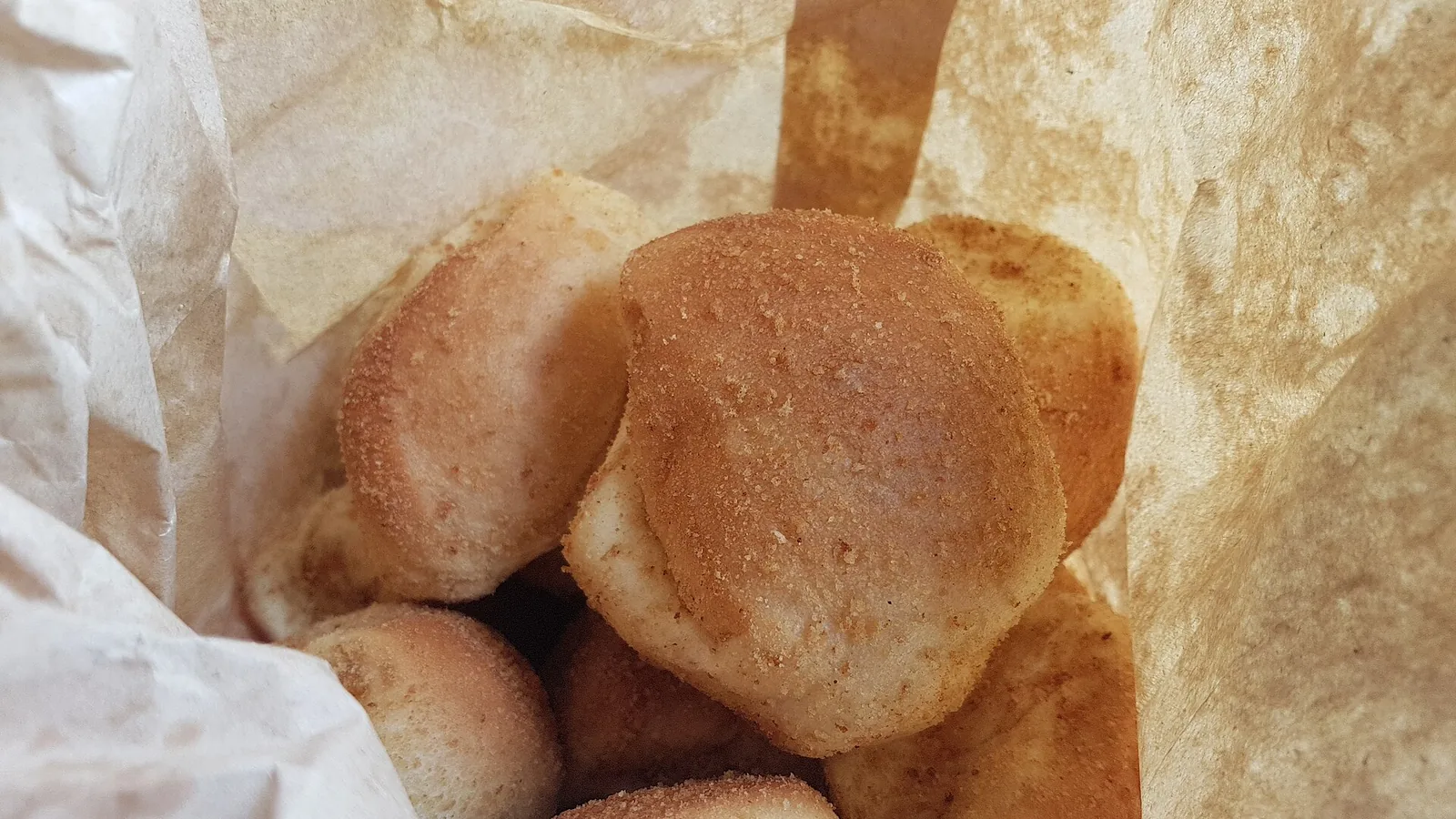
Veneracion writes that pandesal for breakfast crosses social and economic classes, and that for people with little money, the bread dipped in a mug of hot coffee is the whole breakfast.
Kapeng barako, the coffee of Batangas, is liberica, brought to Lipa, Batangas in the 1740s, according to SBS Filipino.
Champorado with tuyo, and lugaw
Some mornings start with a bowl instead of a plate. Champorado is a sweet chocolate rice porridge made with tablea, the local chocolate tablets, eaten at breakfast or as the afternoon snack, merienda. A common pairing is salted dried fish, tuyo: sweet porridge, salty fish, in the same spoonful or side by side. Whether it belongs there, and which fish, is up to the house.
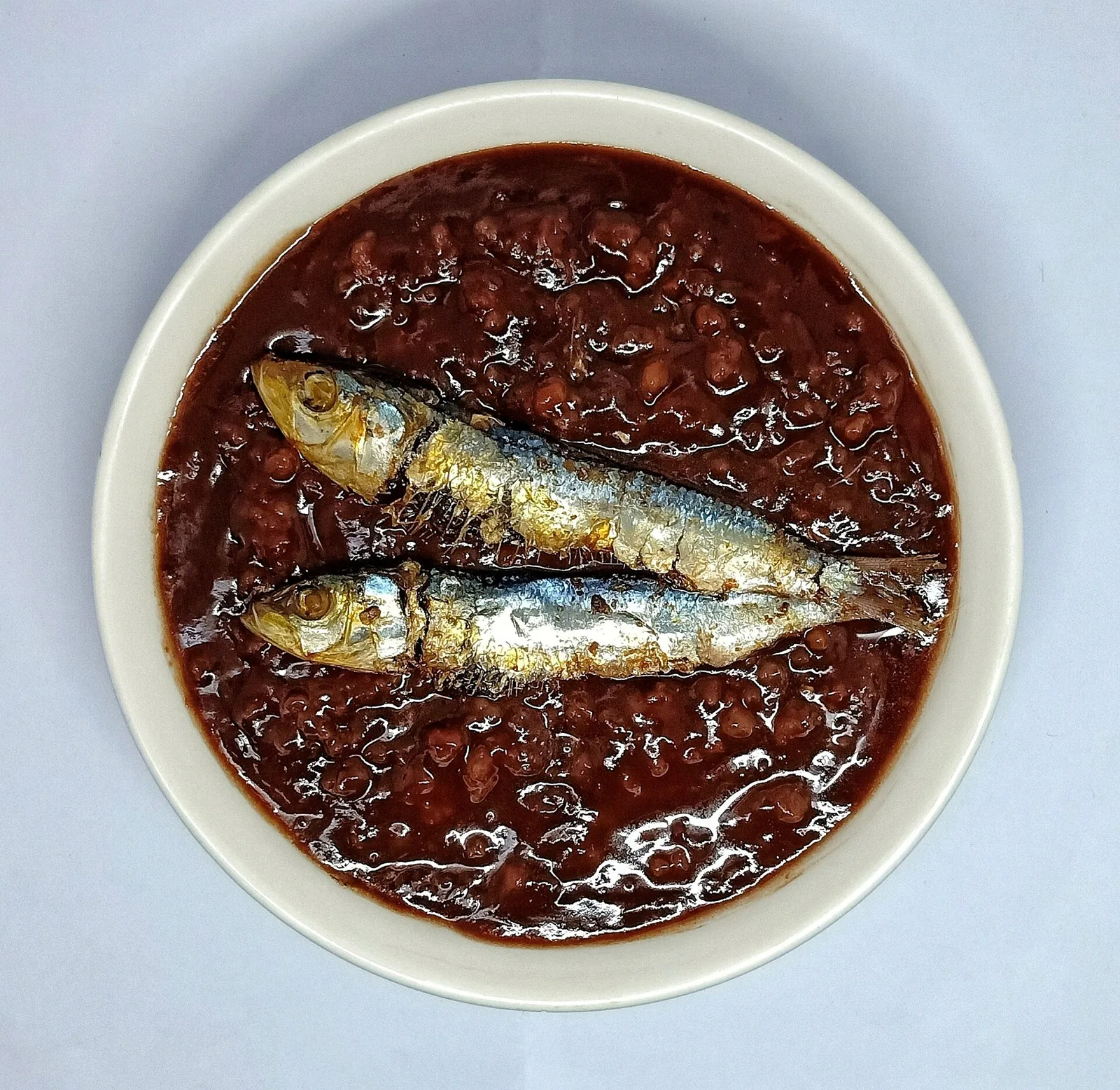
Food writer Marketman's version uses last night's rice, boiled again with water and tablea, with sugar and milk, and topped with dried fish or squid.
The savoury side is lugaw, rice porridge, usually made for breakfast and in cold, rainy weather. One version, arroz caldo, is cooked with ginger and garlic, and most versions add kasubha (safflower), which turns it yellow.
Taho from the street
Some breakfasts walk up to the door. Taho is fresh silken tofu with arnibal syrup and sago pearls. Vendors carry it in two buckets hung from a shoulder pole and call out "Tahô!" as they pass, mostly in the morning.
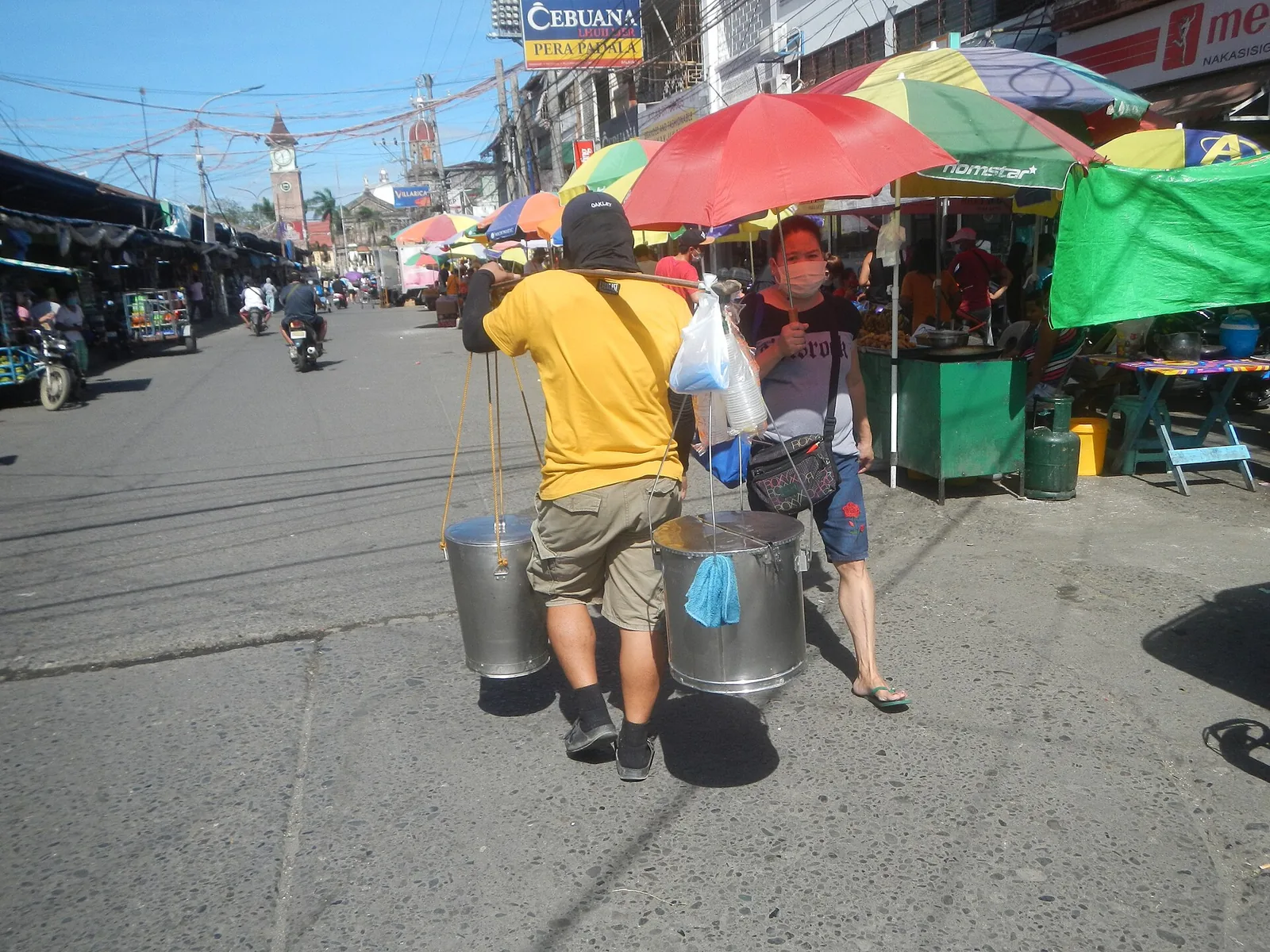
The Daily Tribune followed one vendor who shouts to announce his arrival and, in December 2023, sold a small cup for 10 pesos.
Other islands, other mornings
Silog and pandesal are not the only answer, and other islands have their own. For this piece, peeka found much less written about breakfast in the Visayas and Mindanao than about breakfast around Manila. In Cebu, some remember puto maya with sikwate, hot chocolate, and sweet ripe mango. One reader on Marketman's blog recalled that puto and sikwate were everyday breakfast when they were growing up in Cebu.
In Mindanao, pastil is rice wrapped in banana leaf with shredded chicken or fish, a popular, cheap breakfast, usually eaten with coffee or tsokolate.
What is missing at your table?
This is a first sketch, pieced together from Filipino writers and cooks, nutrition research and reference works. It cannot cover every island, every town's longganisa, or the difference between your lola's champorado and your own weekday coffee and pandesal.
If you grew up in the Philippines, or cook for a Filipino household now: what did this leave out? Which region's breakfast is missing (Visayas and Mindanao breakfasts especially), do you eat champorado with tuyo, and is it agahan or almusal at your home? Corrections and additions are welcome, and good ones will be added to this page, with your permission and credit.
What is on your breakfast table this morning?
On peeka you pick a question and answer it with a photo. See how people around the world answer, and add yours.

Can't wait? Join the iPhone beta on TestFlight.